
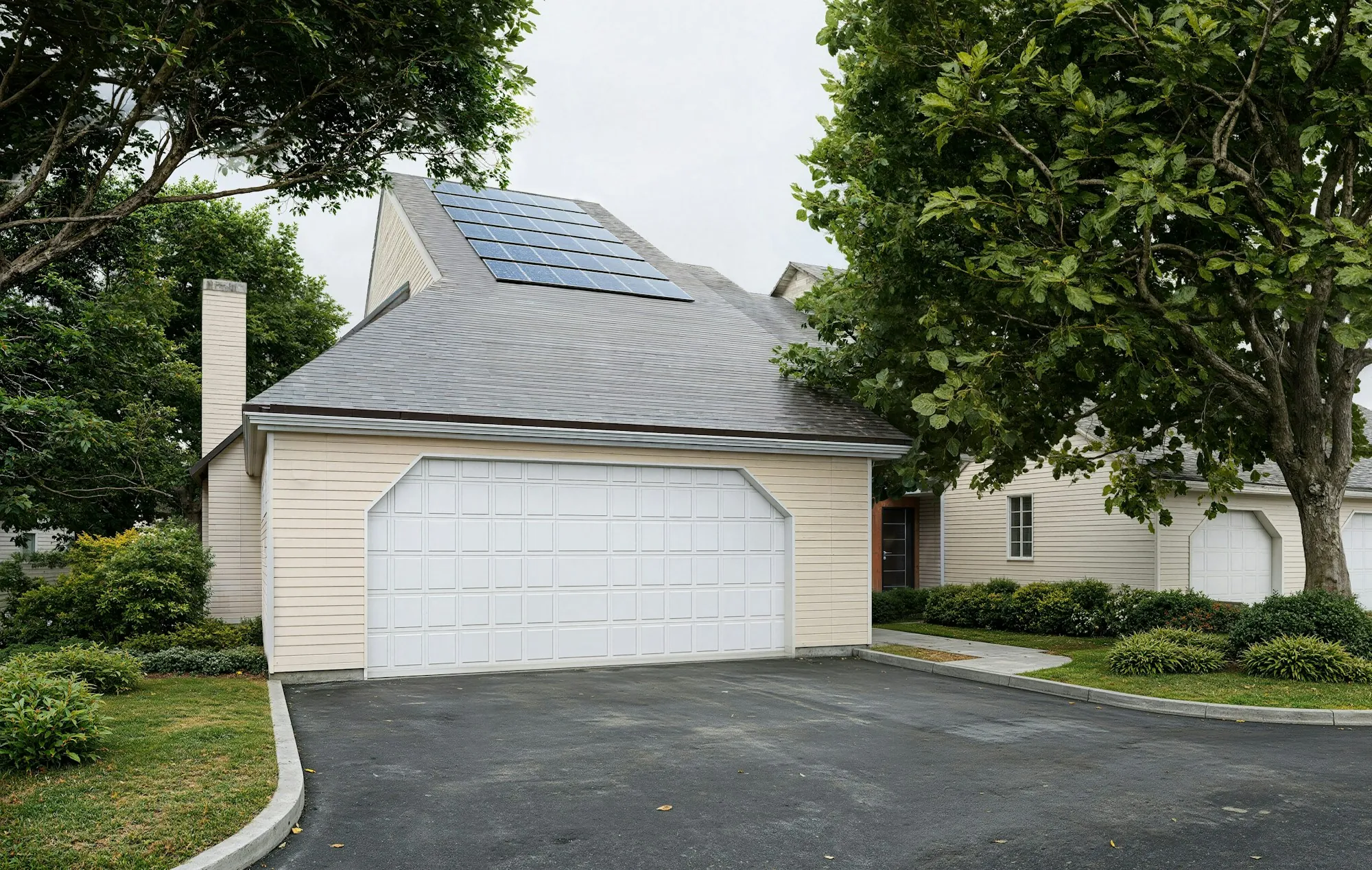
Stand in a Frankfort driveway after a heavy snowfall and you can watch an array change the roof. The glass sheds snow in sheets that land on the shingles below, pile up along the gutters and harden into ice overnight. Meanwhile the roof around the panels holds its snow evenly. That uneven pattern is the heart of snow load on roofs with solar panels, and it matters most when the roof under the array is being replaced. This guide looks at how panels change the way snow and ice sit on a roof in northern Illinois, what that means for the structure and the eaves, how to deal with snow safely, and how to time a reroof around the cold months.
Panels Change Where the Snow Ends Up
A solar array turns an evenly loaded roof into an unevenly loaded one. Snow slides off smooth glass more readily than off shingles, so it collects in heavier piles at the lower edge of the array and along the eaves, while upper sections may sit nearly bare.
FEMA treats this pattern as a real structural concern. Its snow load safety guidance lists unbalanced snow load from drifting and sliding snow among the causes of roof failure, explaining that snow accumulating at different depths creates high, concentrated loads. The same guidance notes that roofs with obstructions such as equipment or chimneys collect drifts in an unbalanced pattern. An array is exactly that kind of obstruction, spread across a whole slope.
None of this means a roof with solar is unsafe. Roofs are designed for regional snow, and arrays are reviewed when they are permitted. It does mean the eaves, valleys and lower courses under and below an array take more punishment than the rest of the roof, and those are the areas to inspect hardest when the roof is replaced.
Ice Dams Gather at the Lower Edge
Ice dams are the winter problem homeowners with solar notice most, because sliding snow delivers extra material straight to the eaves. When snow melts higher on the roof and turns back to ice at the colder overhang, a ridge of ice forms that can hold water back against the shingles.
FEMA’s guidance describes how melt between snow events, combined with blocked or poorly designed drainage, lets ice dams form, creating a concentrated load at the eaves and reducing a sloped roof’s ability to shed snow. Under an array, that water has fewer places to go, and the panels make the trouble spot hard to see from the ground.
A reroof is the one chance to change what sits under the shingles at the eaves. The Village of Frankfort’s building department lists the 2021 International Residential Code among the codes it has adopted with local amendments, and that code governs underlayment and eave protection on residential roofs. Ask your roofer how the new roof will handle the eaves, and confirm current requirements with the village before work begins.
What Snow Load Means for the Structure Under the Array
Snow load is the weight of snow and ice a roof is built to carry, and an array adds its own steady weight on top of it. A roof framed to code for this region handles both, but a reroof under solar is the moment to make sure the structure still matches what it was designed for.
With the panels off and the old shingles gone, the deck and framing under the array can be checked directly. Soft sheathing, stained boards from slow leaks and damage around old mounting holes can all be repaired while the deck is open. Once new mounts go in and the array returns, those areas are covered again for years, which is why a roof replacement under solar panels should include a close look at the deck under the array.
FEMA also lists warning signs that a roof is overstressed during a snow event, including sagging roof members, popping or cracking noises, doors or windows that suddenly will not open or close, and cracks in walls. If you notice any of these, FEMA advises leaving the building and contacting the local building authority or a qualified design professional for an inspection. Those warnings apply with or without solar, but they are worth knowing on any roof carrying extra equipment.
Clearing Snow Off Panels Is Rarely Worth the Risk
The safest approach for most homeowners is to let snow slide off the array on its own. Climbing onto a snowy roof with energized equipment on it combines two serious hazards, and the production lost while panels sit under snow is not worth an injury.
FEMA’s guidance is blunt about roof snow removal in general: it calls it a dangerous activity that should be done only by qualified individuals following safety protocols. It warns that roof snow can slide at any moment, that removing snow completely can damage the roof covering, and that metal snow rakes can damage roofing material and pose an electrocution risk. That last point carries extra weight on a roof with solar wiring.
If heavy snow has you worried about the structure, the better call is a building professional, not a ladder. If the concern is the panels themselves, check with whoever services the system before anyone touches them.
Timing a Reroof Around Northern Illinois Winters
The easiest reroof under solar is one planned before the cold sets in. The National Weather Service office in Chicago maintains a snow climatology for the Chicago area, built on normals from Chicago O’Hare and records for official Chicago sites going back to 1886. The takeaway for homeowners in Frankfort, Mokena and New Lenox is simple: snow is a reliable part of the year here, and a roof that is struggling in autumn will not get better over the winter.
Cold weather complicates roofing in practical ways. Snow or ice on the deck can stop a tear-off outright, and cold, wet stretches make roofing harder to schedule. A detach during a warm stretch followed by a long weather delay also leaves panels in storage longer than anyone planned.
The workable approach is to decide early. If an inspection shows the roof under the array needs replacing, line up the roofer and the solar detach as one sequence with dates set in advance, and build in a margin for weather on both ends. Our detach and reset service is set up around that kind of schedule, and the Solar Panel Removal Frankfort home page covers the rest of the process.
Winter Roofs With Solar: Common Questions
Should I replace my roof before winter if solar is on it? If the roof under the array already shows wear, replacing it before the snow season is usually the safer plan. A failing roof under panels is harder to monitor and repair in winter, and a reroof needs the array removed first. Plan the detach, reroof and reset as one sequence while the weather still cooperates.
Do solar panels make ice dams worse? They can concentrate the conditions that cause them. Snow sliding off the glass collects at the lower edge and eaves, where meltwater can turn back to ice. Good eave protection, drainage and ventilation in the new roof matter more on a roof with an array.
Is it safe to rake snow off my solar panels? Generally it is better not to. FEMA warns that metal snow rakes can damage roofing and pose an electrocution risk, and roof snow removal is hazardous work for anyone without training. Let the array shed snow on its own and call a professional if the load worries you.
Who confirms what the code requires for my reroof in Frankfort? The Village of Frankfort building department. It administers the codes the village has adopted, including the 2021 International Residential Code with local amendments. Your roofer can explain the plan, but the village has the final word on permits and requirements.